Big Walk Beginner Tips: 10 Teamwork Tricks That Change Everything
Ten in-game tips that turn Big Walk from improvised chaos into a coordinated team — walkie-talkies, backpacks, proximity chat, player stacking, squad splitting, and signal codes.
 Big Walk Atlas
Big Walk drops you onto an island with almost no tutorial and a group of friends. This guide collects ten tips that make the difference between a group that wanders in circles and one that actually moves forward. Everything below works from inside the game — no external tools, no shortcuts that break the experience.
The 10 tips at a glance
- Get a walkie-talkie and a backpack early. Remote talk plus carrying two items at once is the single biggest quality-of-life upgrade.
- Stay on in-game voice chat. Skip Discord or Steam voice; the game is designed around proximity chat.
- Learn arm gestures and pair them with items. When sound is cut off, movement becomes your language.
- Prep lighting before night falls. Flashlights and lamps turn darkness from a hazard into a marked trail.
- Master player stacking. The person at the bottom controls everything; the person on top acts fast.
- Split large lobbies into squads. Six to twelve players should work in groups of two or three, not one block.
- Climb high and scout before you move. Towers and binoculars reveal secrets the obvious path hides.
- Slow down — do not rush. The walk itself is the content; treat it like a checklist and you lose it.
- Choose your host and world size deliberately. The host holds the save, and player count changes the puzzles.
- Agree on signal codes before you need them. Three flashes for "ready", a red flare for "get here now".
Before you start
You can begin with nothing, but three pickups remove most early friction: a walkie-talkie for long-range talk, a backpack for carrying two items, and a flashlight or lamp for night. None of them are gated behind a full tower clear — you just need to walk to where they sit. Bring them to every session; the tips below assume you have them.
Tip 1 — Get a walkie-talkie and a backpack first
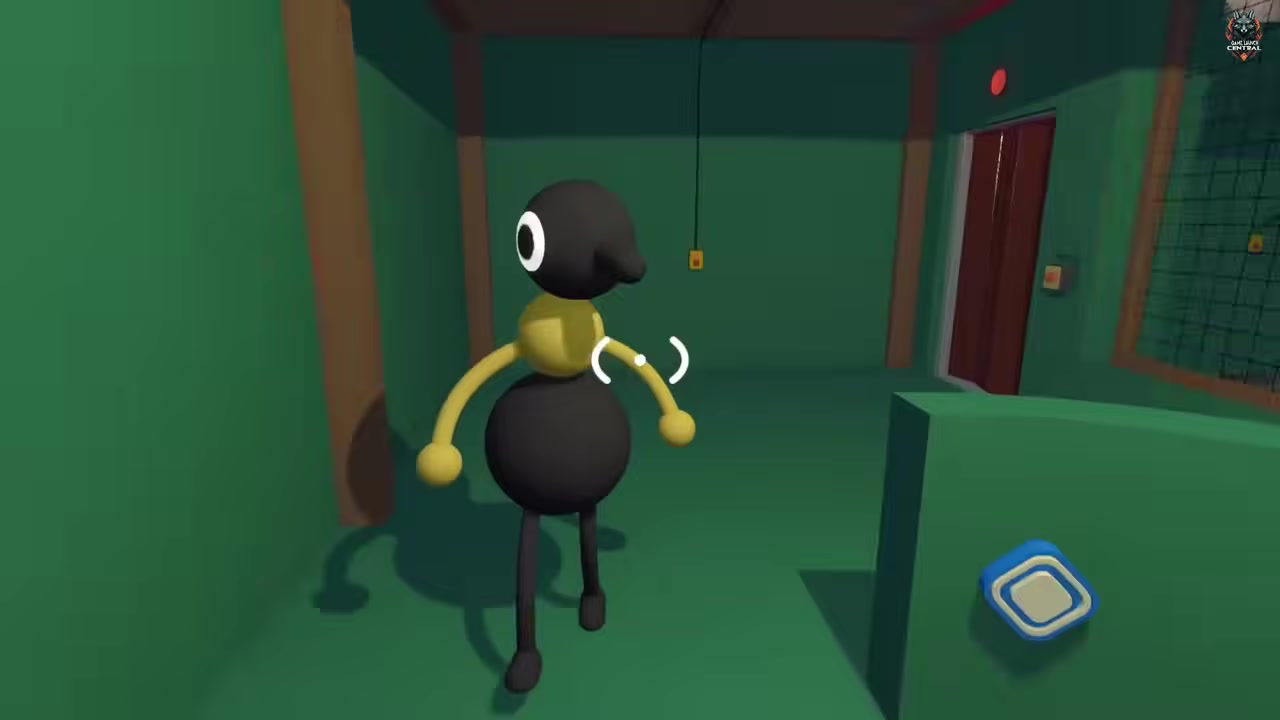
00:45 — the walkie-talkie and backpack combo is the first thing to pick up.
The walkie-talkie is not a luxury item; it is the tool that keeps your group talking once you spread out. Proximity chat only reaches so far, and the moment two players walk in different directions the conversation breaks. A walkie-talkie fixes that. The backpack is the second half of the same idea: it lets you carry two items at once, so one player can hold a walkie-talkie and a flashlight instead of dropping one on the floor every ten steps.
What success looks like: one player walks off toward a distant landmark and can still answer you over the walkie-talkie, while a second player carries the light and the radio at the same time.
Common mistake: ignoring both items and relying on proximity chat, then losing the group the first time the map opens up. Recovery: if you drop or lose either item, retrace your route to the pickup point — items in Big Walk do not vanish on their own.
Tip 2 — Stay on in-game voice chat
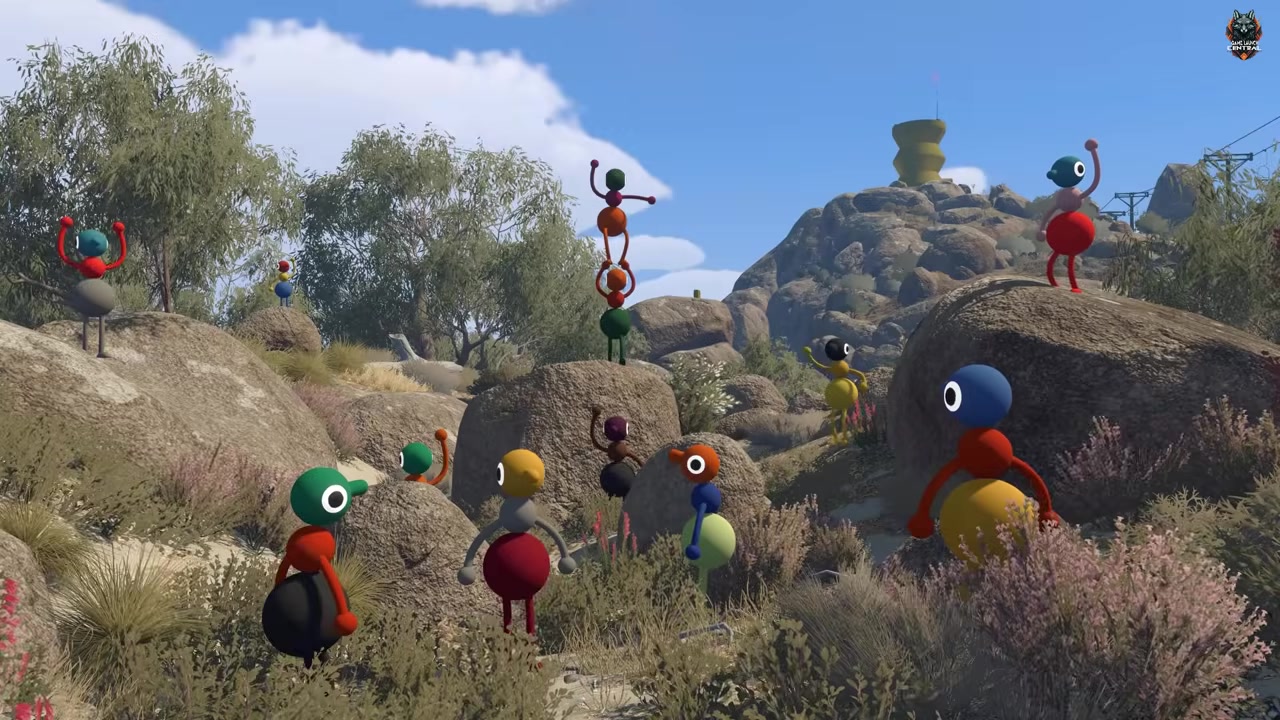
02:30 — Big Walk is built around proximity chat, not an external voice call.
The game warns you on first startup, and the developers have said it plainly: do not run Discord, Steam voice, or any external chat alongside it. Big Walk is designed around proximity chat — you can only hear people who are near you. When you replace that with a party call, you remove the very limitation that makes puzzles interesting: the moments where you must plan a route, use a signal, or trust that someone far away is doing their part. The in-game chat has noise cancellation and a mute button, so nothing technical is missing.
What success looks like: when two players are far apart, they genuinely cannot hear each other — and you treat that as part of the plan rather than an annoyance.
Common mistake: leaving Discord on "just in case", which quietly trivializes every separation-based puzzle. Recovery: agree before the session that external chat stays closed; if someone forgets, drop the call rather than trying to "play around" it.
Tip 3 — Learn arm gestures and combine them with items
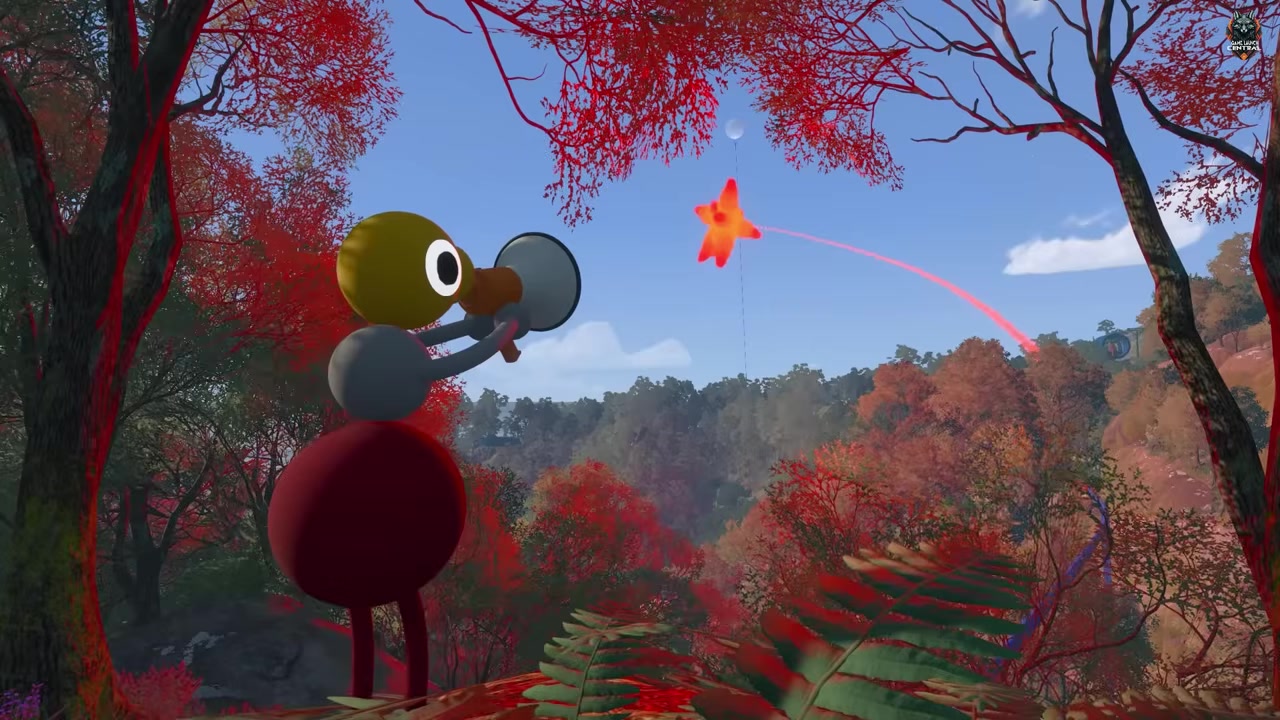
04:40 — arm gestures become the group's own language when voice is cut off.
Speaking into a mic is only the baseline. The real skill is arm gestures: each raised arm can carry different meaning, and a group that practices this develops its own shorthand. This stops being optional the moment the game puts you behind soundproof glass or otherwise cuts your voice. A player who has not trained gestures freezes in those rooms; a player who has keeps moving. The advanced layer is combining gestures with items — a flashlight, a laser pointer, or a flare adds direction and urgency on top of the arm signal.
What success looks like: one player points left with an arm and blinks a flashlight to confirm, and the other player acts without a word being said.
Common mistake: treating gestures as a joke until a soundproof room locks the group up. Recovery: if communication collapses mid-puzzle, step back to a visible spot and use slow, single, exaggerated arm signals — one meaning at a time.
Tip 4 — Prep lighting before night falls
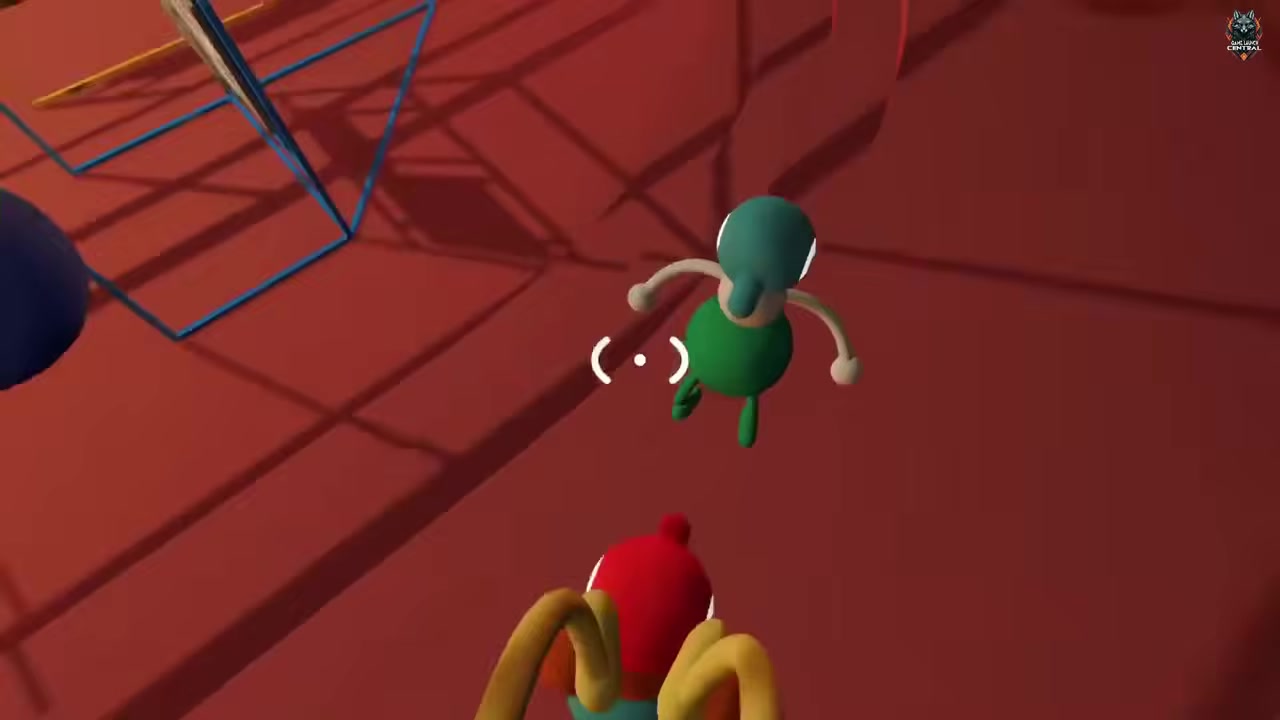
06:30 — flashlights and lamps turn night into a marked trail instead of chaos.
By day the island is legible. At night it gets genuinely dark, and an unprepared group falls apart. Keep flashlights and lamps ready before dark, and use lamps as trail markers: place them along your route so the group can see what has already been explored. That turns your walk into a visible record of where you have been, which is exactly what you want when the team needs to reunite or choose which direction is still unchecked.
What success looks like: after the sun sets, the group can follow the line of lamps back the way it came without guessing.
Common mistake: assuming falling does no harm and getting careless at night. Falling causes no damage, but it makes you drop everything you carry — and losing a walkie-talkie or flashlight in the dark is a real headache. Recovery: carry light at night, avoid risky ledges while holding essential items, and if something drops, mark the spot with a lamp before searching.
Tip 5 — Master player stacking
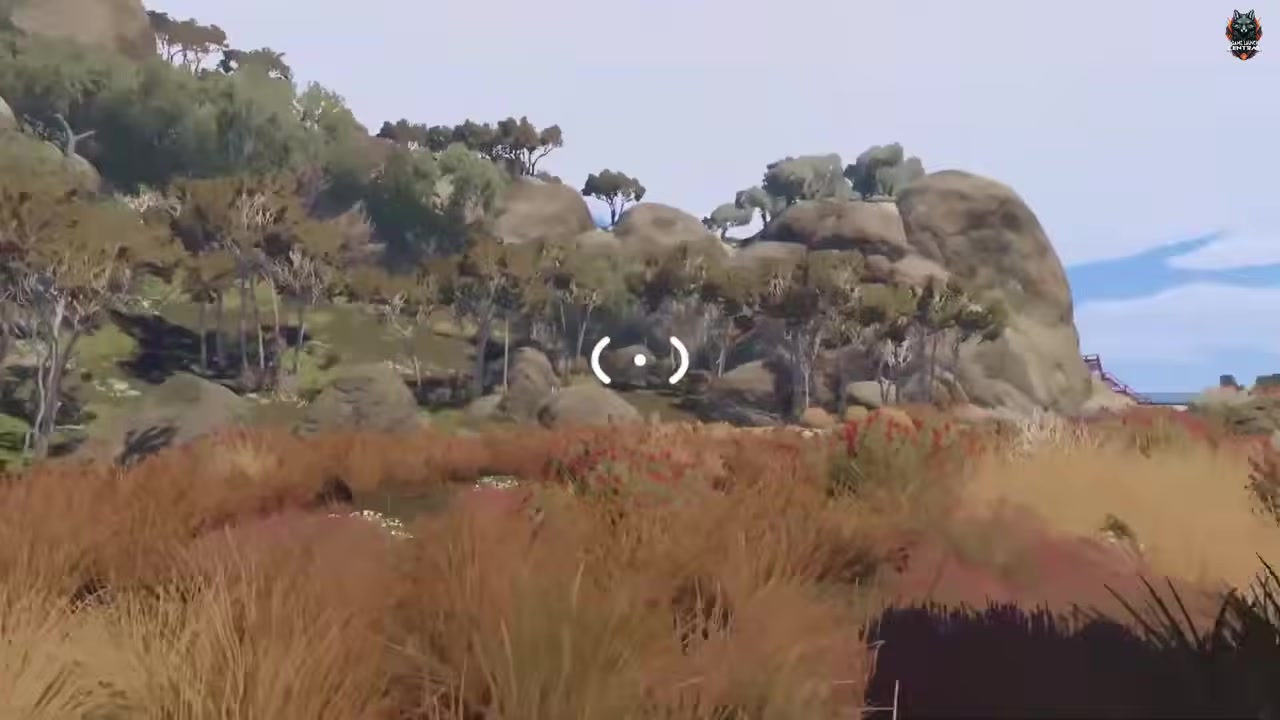
08:10 — the player at the bottom controls the whole stack.
Stacking is not a party trick; it is how Big Walk asks you to reach high buttons and out-of-reach interactions. The rule that matters: the person at the bottom controls everything. If the base is not firm, the tower collapses no matter how good the top player is. The bottom player adjusts position slowly and calmly; the top player stays fast and precise on the interaction so nobody has to balance for long. It works with two players and gains a new dynamic with three or four — more height, more wobble, more talking.
What success looks like: the base holds steady, the top player taps the button in one or two attempts, and the whole thing comes down safely.
Common mistake: the bottom player micro-adjusting and toppling the tower, or everyone shouting at once. Recovery: if the stack falls, reset to flat ground, have the bottom player plant first, and call "still" before the top player climbs again.
Tip 6 — Split large lobbies into squads
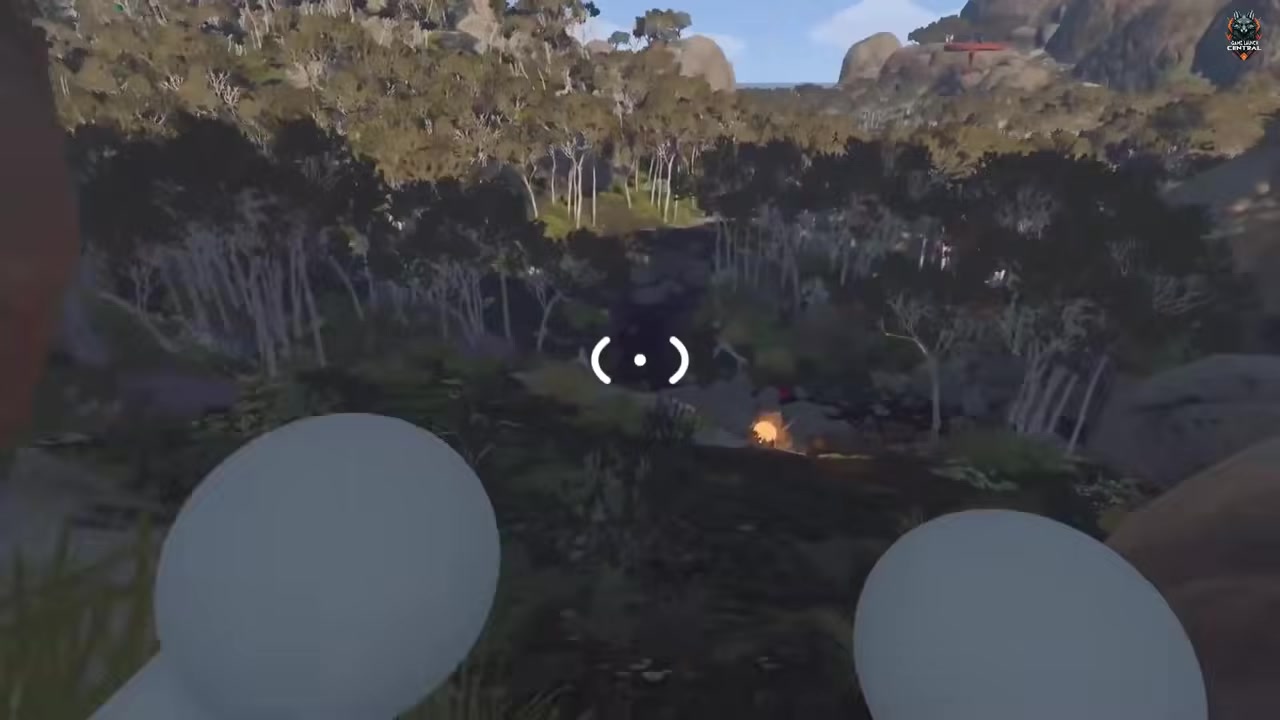
10:20 — six to twelve players work better as squads of two or three.
In a lobby of six, eight, or twelve, the worst move is walking everywhere as one block — it looks organized but becomes slow chaos. Split into squads of two or three and give each one a direction, then share what you find. This only works if you agree on meeting points up front: pick a high tower, or use a flare or a megaphone to pull everyone back together. Remember that the main puzzles are built for up to four players, so with ten people in the lobby, leaving a smaller group on the solution while the rest explore is far more efficient than everyone crowding one puzzle.
What success looks like: each squad covers a different area, then reconvenes at the agreed landmark and reports what it found.
Common mistake: everyone staying glued together, or splitting up with no meeting point and no way to regroup. Recovery: if the group scatters without a plan, send a flare or climb the tallest nearby landmark and use it as a beacon to reassemble.
Tip 7 — Climb high and scout before you move
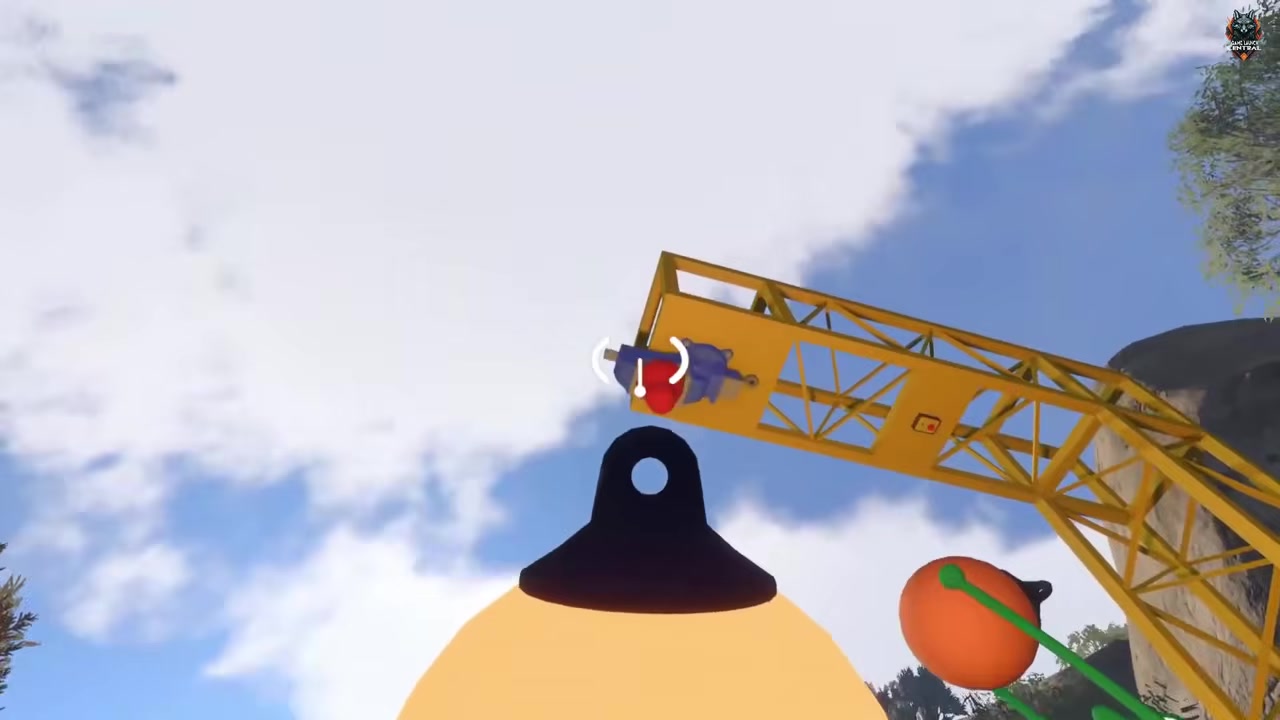
11:40 — high points and binoculars reveal what the obvious path hides.
Big Walk likes to trick you with the obvious. The path that looks clear is often not the interesting one, and the map rewards players who stop and look around. Climb towers and rocks — any place that gives you vision is an advantage — and use binoculars to spot things that do not make sense at a distance; that is usually where a secret sits. The extra layer is that many useful items can be carried from one puzzle to another, so an exploratory mindset opens shortcuts and alternative solutions the main objective would never show you.
What success looks like: from a high point you notice a landmark or item you would have walked straight past, and it leads to a shortcut or a hidden pickup.
Common mistake: tunnel-visioning the main objective and missing everything scattered off to the side. Recovery: when stuck, climb the nearest high point and re-scan the area — a new angle usually exposes the thing you missed.
Tip 8 — Slow down — do not rush
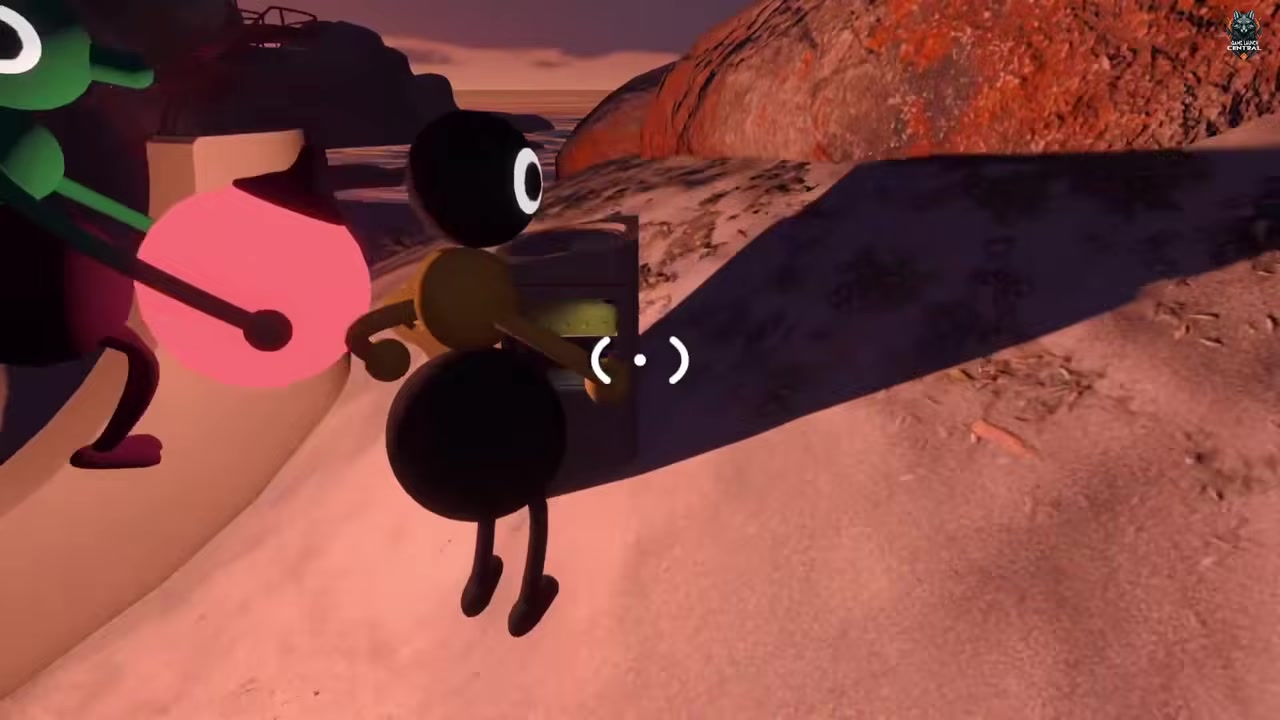
14:05 — the slow pace is the content, not a lack of it.
Big Walk does not reward speed. Rushing to "beat" it works against the whole design and makes the experience emptier. The slow pace is not missing content — the walk is the content: the random conversations, the small distractions, the five minutes spent recovering an item someone dropped. Sitting to watch the sunset or pushing a friend down a hill may look like wasted time on paper, but those are the moments that stick. The worst way to play is treating it like a checklist.
What success looks like: the group stops optimizing and simply exists in the space together, and nobody feels the need to race to the next objective.
Common mistake: treating the game as a list of objectives to clear, which gets you to the end while losing everything that happens on the way. Recovery: if the session feels like a grind, deliberately do something pointless for a minute — watch the view, mess with physics — and let the group reset.
Tip 9 — Choose your host and world size deliberately
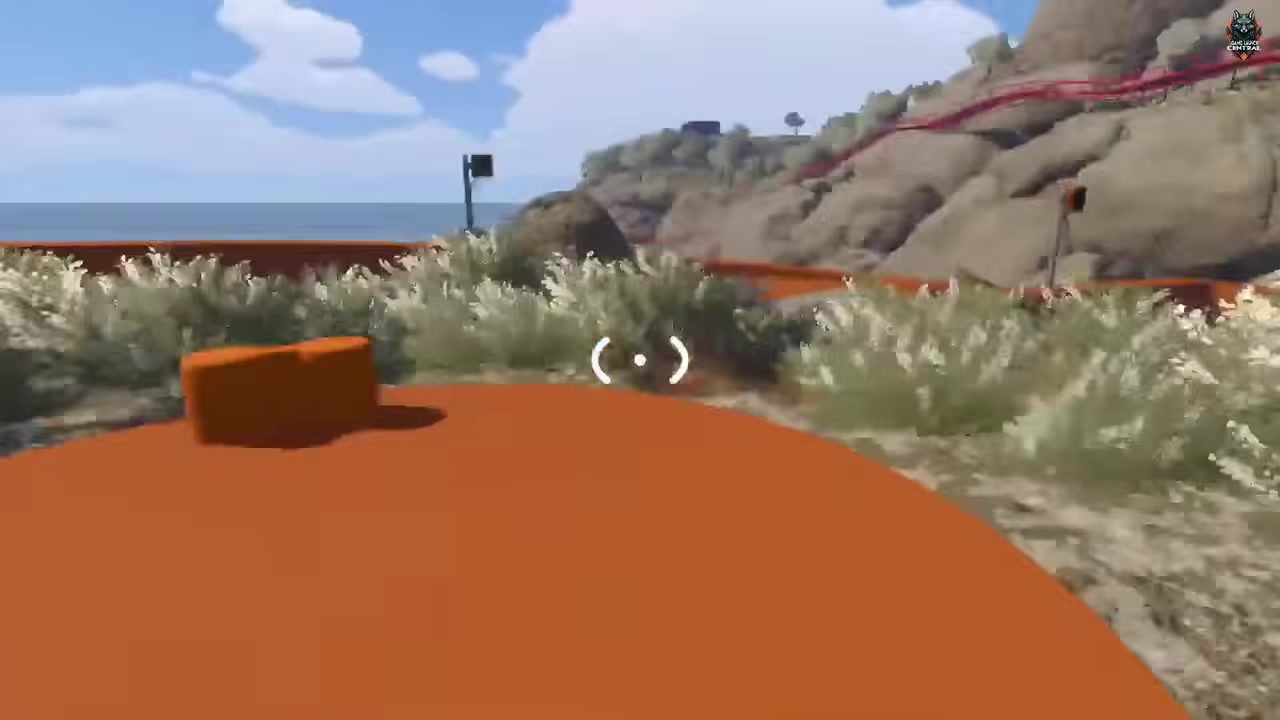
15:20 — the host carries the save, and player count changes the puzzles.
The host is not just whoever opened the lobby — they carry the save and define how the world works, so pick someone consistent who will actually keep the save alive. Equally important is the world configuration at the start: whether the game is set for two, three, or more players changes the puzzles, the layout, and how you interact with the environment. It is not just difficulty scaling, it is the design itself. If you start a high-player world and someone leaves, everything can end up looking broken or impossible.
What success looks like: the save lives on a player who shows up reliably, and the world size matches the group you can actually keep together.
Common mistake: letting whoever opened the lobby become host by accident, or starting a large world for a group that is not fixed. Recovery: if the group is unstable, restart with a smaller configuration — it feels like a limitation but guarantees the game keeps flowing.
Tip 10 — Agree on signal codes before you need them
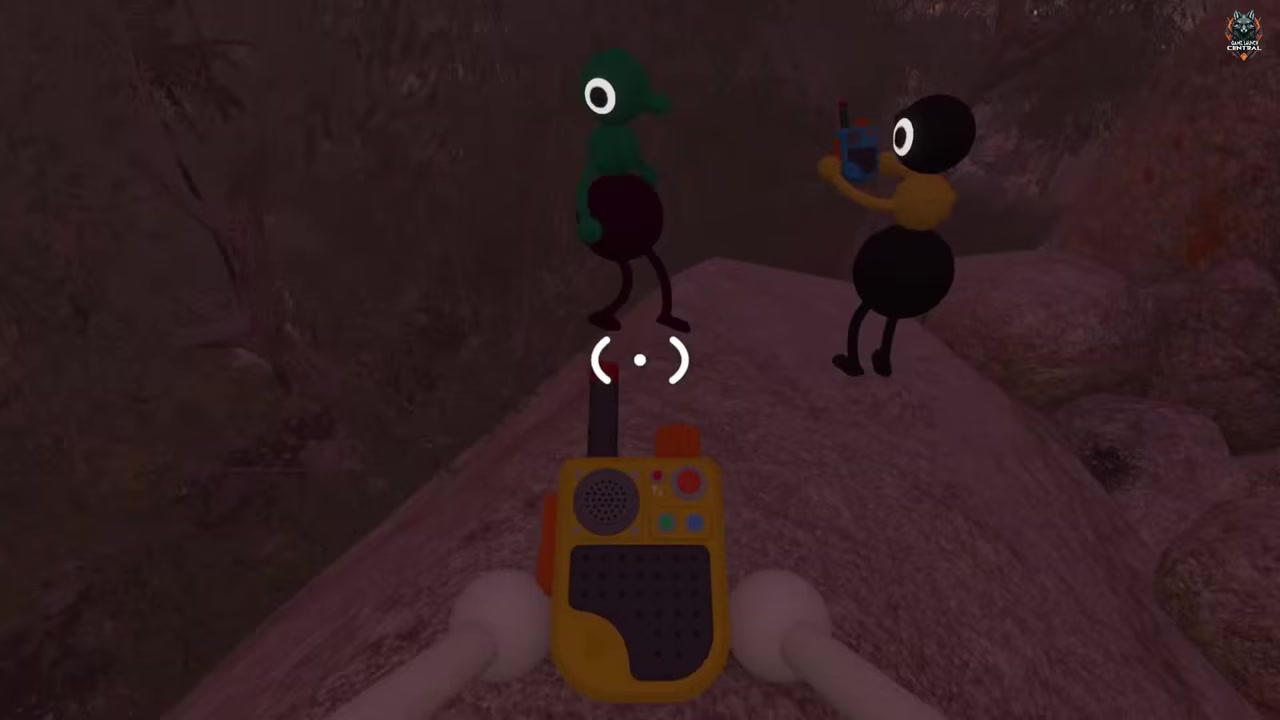
17:10 — pre-agreed codes prevent silent chaos when the group separates.
The group will separate, and when it does there is no time to improvise. Agree on codes beforehand: three flashlight flashes equals "I'm ready", a red flare equals "get here now". Basic items become language — a laser pointer turns into direction or urgency, a blinking flashlight in the dark becomes a voice, and a cowbell reads almost like an emotional signal. Teams that do this end up with their own dialect, and it is far more satisfying than any traditional co-op mechanic.
What success looks like: one player sends a signal from across the island and everyone understands it instantly.
Common mistake: waiting until people are already separated and out of voice range, then trying to invent signals in the dark. Recovery: agree on two or three simple codes at the start of every session, and stick to them — consistency matters more than cleverness.
Player-count differences
- Two players: every core puzzle still works. Stacking is at its most direct, and communication is a simple pair conversation. This is the most forgiving starting configuration.
- Three or four players: the sweet spot for the main puzzles. Stacking gains height and wobble, and splitting into pairs becomes natural.
- Six to twelve players: the main puzzles are still built for up to four, so split into squads and agree on meeting points. More people do not solve a four-player puzzle faster — they just get in each other's way.
Source
This article is a single-source guide synthesized from one public video: Big Walk - 10 Advanced Tips You NEED to Know by Game Launch Central (youtube.com/watch?v=S_kQX5wFf2Y). Every section above maps to a timestamped moment in that video; the frames are temporary extracts used only to illustrate the steps, not final artwork. Facts were taken from the video's own captions and footage; this article does not claim cross-verification against other sources.